
With crypto company funding at the forefront, this world of finance offers fascinating opportunities for innovative ventures. As blockchain technology gains traction, understanding how these companies secure their funding becomes increasingly vital for investors, entrepreneurs, and enthusiasts alike.
Crypto company funding encompasses various mechanisms and trends that have emerged in the dynamic landscape of digital currencies. With sources ranging from initial coin offerings (ICOs) to venture capital investments, the funding environment is constantly evolving, highlighting its importance in shaping the future of the blockchain ecosystem.
Overview of Crypto Company Funding
Crypto company funding plays a vital role in the blockchain ecosystem, providing essential resources for innovative projects and startups in the cryptocurrency space. It encompasses various methods through which companies raise capital, facilitating the development and expansion of blockchain technologies. Understanding the funding landscape is crucial as it directly impacts the growth and sustainability of crypto ventures.There are multiple sources of funding available for crypto companies, each with its unique characteristics.
These include venture capital, initial coin offerings (ICOs), crowdfunding, and traditional financing methods. Over the past few years, trends in crypto funding have undergone significant changes, influenced by market dynamics, regulatory developments, and investor sentiment.
Types of Funding Mechanisms
Initial coin offerings (ICOs) have emerged as a popular funding mechanism, allowing companies to raise capital by issuing their own tokens to investors in exchange for established cryptocurrencies like Bitcoin or Ethereum. ICOs function as a means of crowdfunding, enabling projects to bypass traditional fundraising routes. However, they come with risks, including regulatory scrutiny and market volatility.Venture capital investment in crypto companies has been on the rise, with numerous firms recognizing the potential of blockchain technology.
This type of funding often provides not only capital but also strategic guidance and networking opportunities, significantly impacting a startup’s success. The influx of venture capital has led to increased competition and innovation within the crypto space.Crowdfunding has also gained traction, allowing crypto projects to raise funds from a broader audience. While it democratizes access to investment opportunities, crowdfunding in the cryptocurrency space presents its own set of challenges, such as regulatory compliance and the difficulty in building trust with potential investors.
Regulatory Environment
The regulatory environment governing crypto funding varies significantly across jurisdictions, with some countries embracing blockchain technologies and others imposing strict regulations. In regions like the United States and the European Union, regulatory bodies are actively working to establish frameworks that protect investors while fostering innovation. These regulations shape funding strategies for crypto companies, influencing how they structure their fundraising efforts.Different countries regulate crypto funding practices in diverse ways.
For instance, while countries like Switzerland have created favorable conditions for ICOs, others like China have banned them altogether. This disparity means crypto companies must navigate a complex landscape of regulations to secure funding effectively, often requiring legal expertise and strategic planning.
Case Studies of Successful Funding
Several crypto companies have successfully navigated the funding landscape, employing innovative strategies that set them apart. For example, Ethereum’s ICO in 2014 raised over $18 million, paving the way for the development of decentralized applications on its platform. Similarly, projects like Binance and Filecoin have leveraged unique funding approaches to attract significant investments.Innovative funding approaches utilized by crypto startups include hybrid models combining ICOs with venture capital, enabling them to tap into diverse funding sources while maintaining a degree of regulatory compliance.
The table below showcases notable funding rounds of successful crypto projects, highlighting the amounts raised and the major investors involved.
| Project | Amount Raised | Investors |
|---|---|---|
| Ethereum | $18 million | Various individual investors |
| Binance | $15 million | Several venture capital firms |
| Filecoin | $257 million | Andreessen Horowitz, Union Square Ventures |
Challenges in Crypto Funding
Crypto companies often face several challenges while seeking funding. These challenges include regulatory hurdles, market volatility, and a general lack of trust in new projects. Investors may be hesitant to engage with crypto startups due to the risk of fraud or project failure, making it essential for companies to establish credibility and transparency.Market volatility significantly impacts fundraising efforts within the crypto sector.
A downturn in cryptocurrency prices can deter potential investors, making it difficult for companies to raise capital at favorable valuations. To overcome these hurdles, crypto companies can focus on building strong partnerships, enhancing their market presence, and actively engaging with their communities to foster trust and interest.
Future Trends in Crypto Company Funding
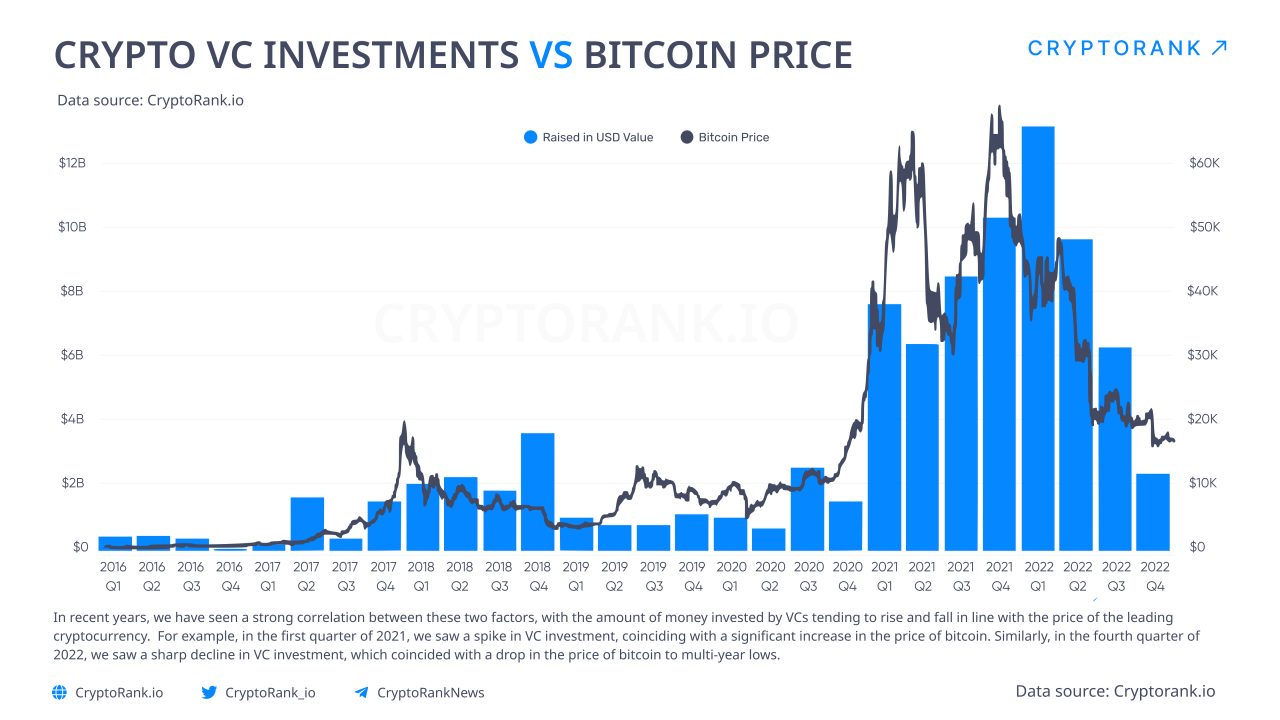
Emerging trends are poised to shape the future of crypto funding significantly. One notable trend is the rise of decentralized finance (DeFi), which offers new funding mechanisms that allow projects to launch without traditional intermediaries. Additionally, advancements in blockchain technology are streamlining the funding process, making it more accessible and efficient for startups.Technologies such as smart contracts are influencing funding processes in the cryptocurrency landscape, enabling automated and trustless transactions.
This innovation enhances security and reduces the likelihood of fraud, encouraging more investors to participate in the crypto funding ecosystem.Looking ahead, several predictions can be made regarding crypto funding developments over the next decade. These include:
- Increased regulatory clarity, leading to more institutional investment.
- Expansion of DeFi platforms that facilitate seamless funding for startups.
- Greater integration of AI and machine learning to assess investment risks and opportunities.
Last Recap

In conclusion, navigating the complexities of crypto company funding reveals both challenges and opportunities for the industry. As emerging trends and technologies continue to reshape funding strategies, staying informed about these developments will be essential for those looking to engage with this vibrant market.
FAQ Compilation
What are initial coin offerings (ICOs)?
ICOs are a fundraising method where new cryptocurrencies are sold to investors in exchange for established cryptocurrencies like Bitcoin or Ethereum.
How does venture capital differ from ICOs?
Venture capital involves private investors funding companies in exchange for equity, while ICOs typically offer tokens that do not represent equity ownership.
What challenges do crypto companies face when seeking funding?
Common challenges include regulatory uncertainty, market volatility, and public perception of cryptocurrencies.
How can crypto companies overcome funding hurdles?
Companies can enhance credibility through transparent operations, engage with regulatory bodies, and develop robust business models to attract investors.
What future trends are expected in crypto funding?
Emerging trends include the rise of decentralized finance (DeFi), the incorporation of artificial intelligence in funding decisions, and increased regulation surrounding crypto investments.